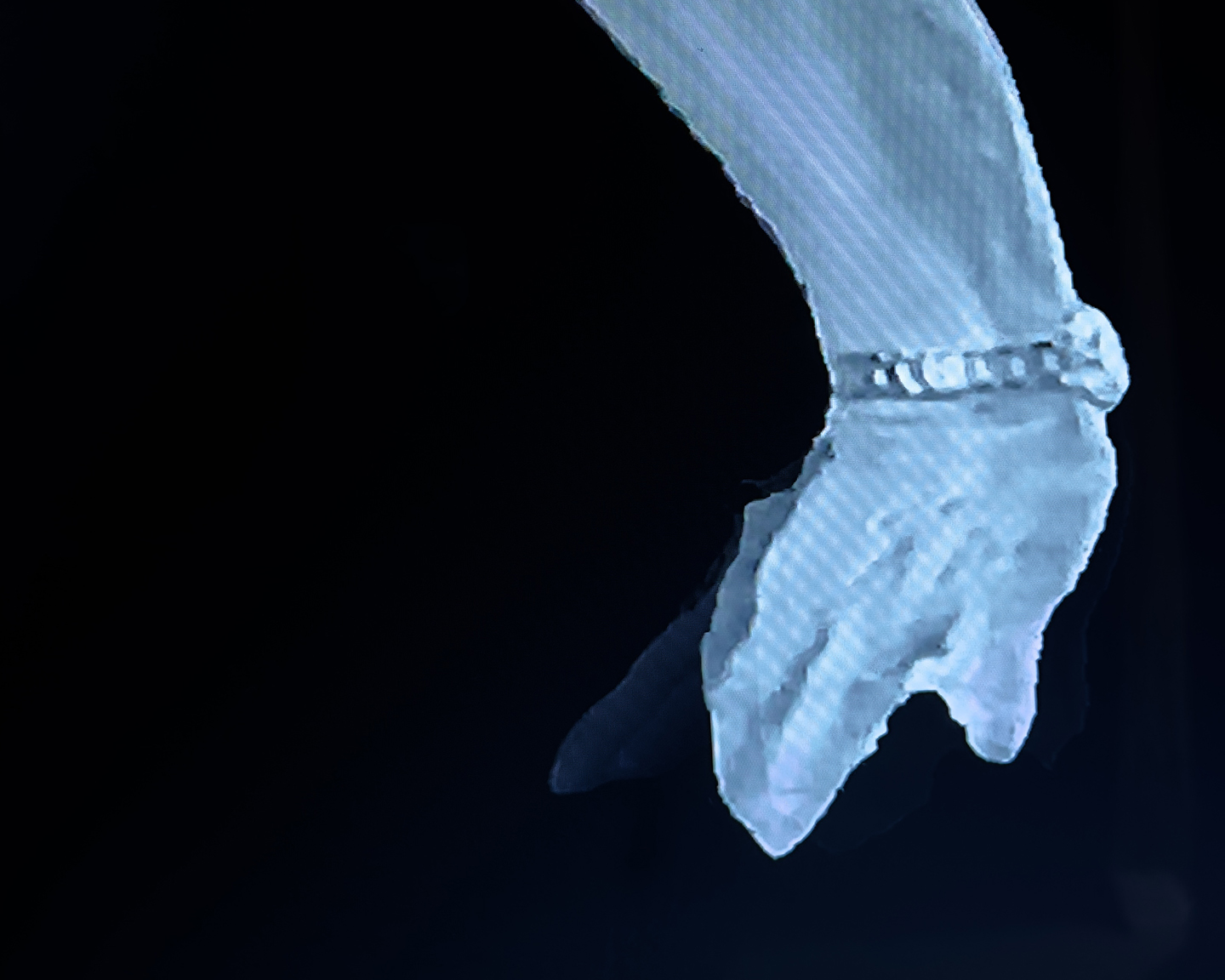
An Encounter: A Rhythm of Its Own
1 minute 42 seconds video, 2026
Video edit: Siddhartha Shakya
With the kind permission of Mr. Madan Krishna Shrestha
BIDHATA KC is a Nepal-based visual artist, educator, and curator. Trained in Fine Arts and Sociology, her interdisciplinary practice explores identity, material culture, memory, ritual, and the tension between tradition and contemporary life. Working across multiple mediums, conceptual installation, and experimental practices, she examines how materials, gestures, and everyday spaces carry histories and shape belonging.With over two decades of practice, KC has exhibited in Nepal and internationally and received several national and international recognitions, including the Arniko National Youth Art Award (2010), Special Mention Award at the National Fine Art Exhibition (2011), and the Bhadrakumari Ghale Fine Art Award (2020). She was also a commissioned artist for the Kathmandu Triennale (2017) and participated in the India Art Fair (2016) and the U.S. Department of State’s International Visitor Leadership Program (2022).
Artist Statement
It was only a moment, an encounter I did not intend. A hand moved in rhythm, and for a moment it seemed less like a part of a body and more like an instrument playing itself. Its movement carried a rhythm of its own, creating a language before words—a language made of gesture, pause, repetition, and movement.I watched it move and wondered what it was telling. Perhaps it carried stories held within its gestures: tales of touch, making, memory, and experiences that remain unknown to us. The hand became a vessel, carrying traces of histories and memories that cannot be fully seen, translated, or understood.In that brief encounter, it seemed to have a life beyond its function, a presence of its own, speaking beyond the human intention that set it in motion. I found myself held by its motion. In that moment, the hand became art itself—dancing, performing, and speaking in a language of its own.
BIJAYA MAHARJAN is a master sculptor based in Kathmandu, where he runs Regal Studio, and a prominent voice in contemporary Nepalese art, recognized for pioneering the genre of Contemporary Spiritual Realism. Trained through a rigorous five-year apprenticeship under Guru Rabindra Jyapoo, his practice bridges traditional Himalayan iconography with contemporary expressive abstraction.
Working across bronze, marble, fiberglass, and clay, Maharjan explores permanence, spiritual heritage, and the human condition. He is a recipient of a National Fine Arts Award from NAFA and a regional award for excellence in craft. His work has been presented internationally and locally, including a collaborative project at the 2022 Venice Biennale and a solo exhibition at Takpa Art Gallery in 2023. His monumental and collectible sculptures, including Garuda and The Missile, are held in distinguished private and corporate collections internationally, including the TATA Group.
Artist Statement
This piece explores the delicate tension between permanence and transformation, bridging ancient iconography with a fractured, modern consciousness. Reclining in a posture of watchful repose, the figure merges with the raw stone plinth beneath it, symbolizing an indissoluble bond to the earth. The weathered textures and metallic patinas reflect the scars of time, inviting viewers to contemplate how spiritual heritage endures amidst the rapid velocity of the contemporary world.
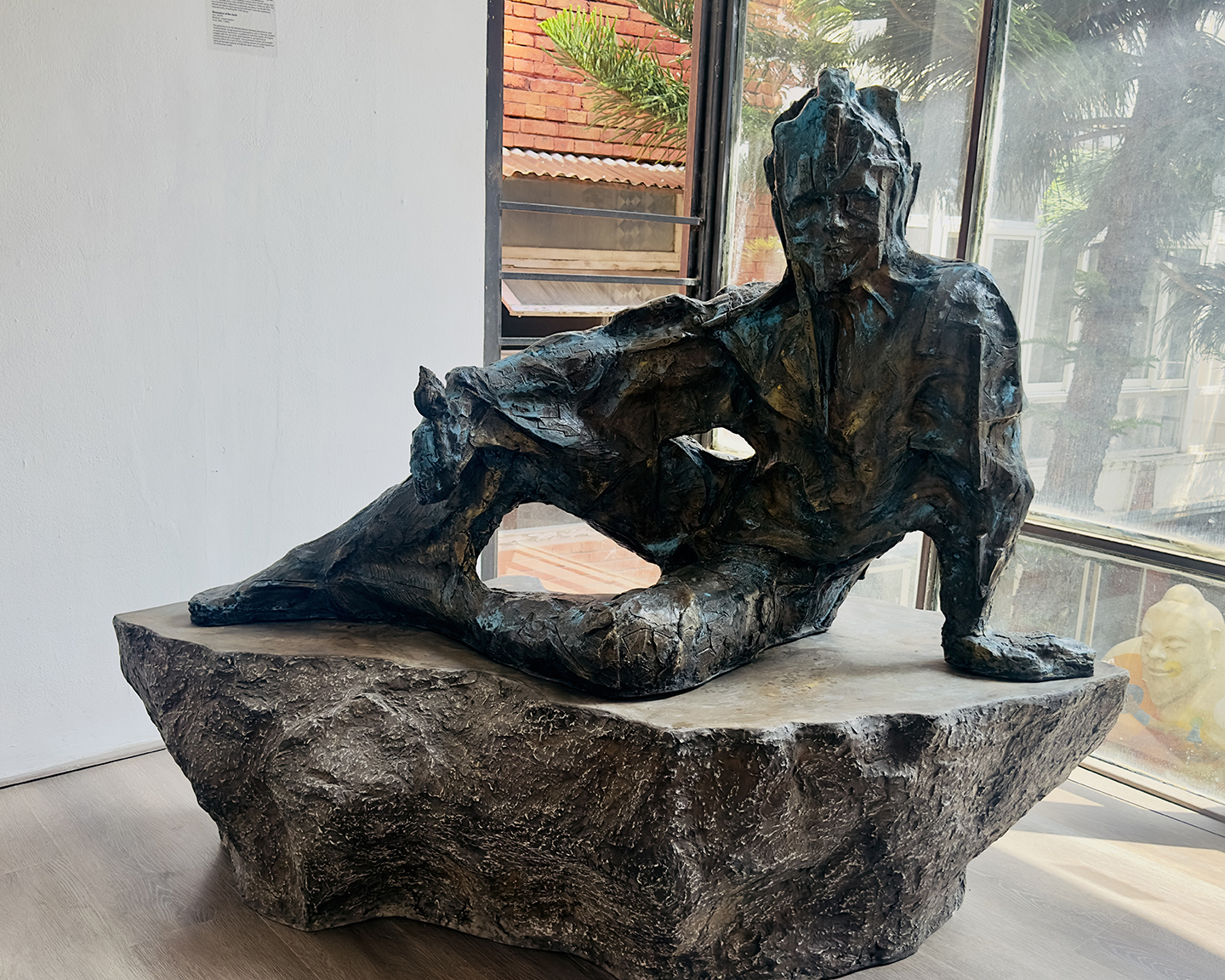
Resonance of the Earth
Size: 5ft/4ft
Medium: mixed medium
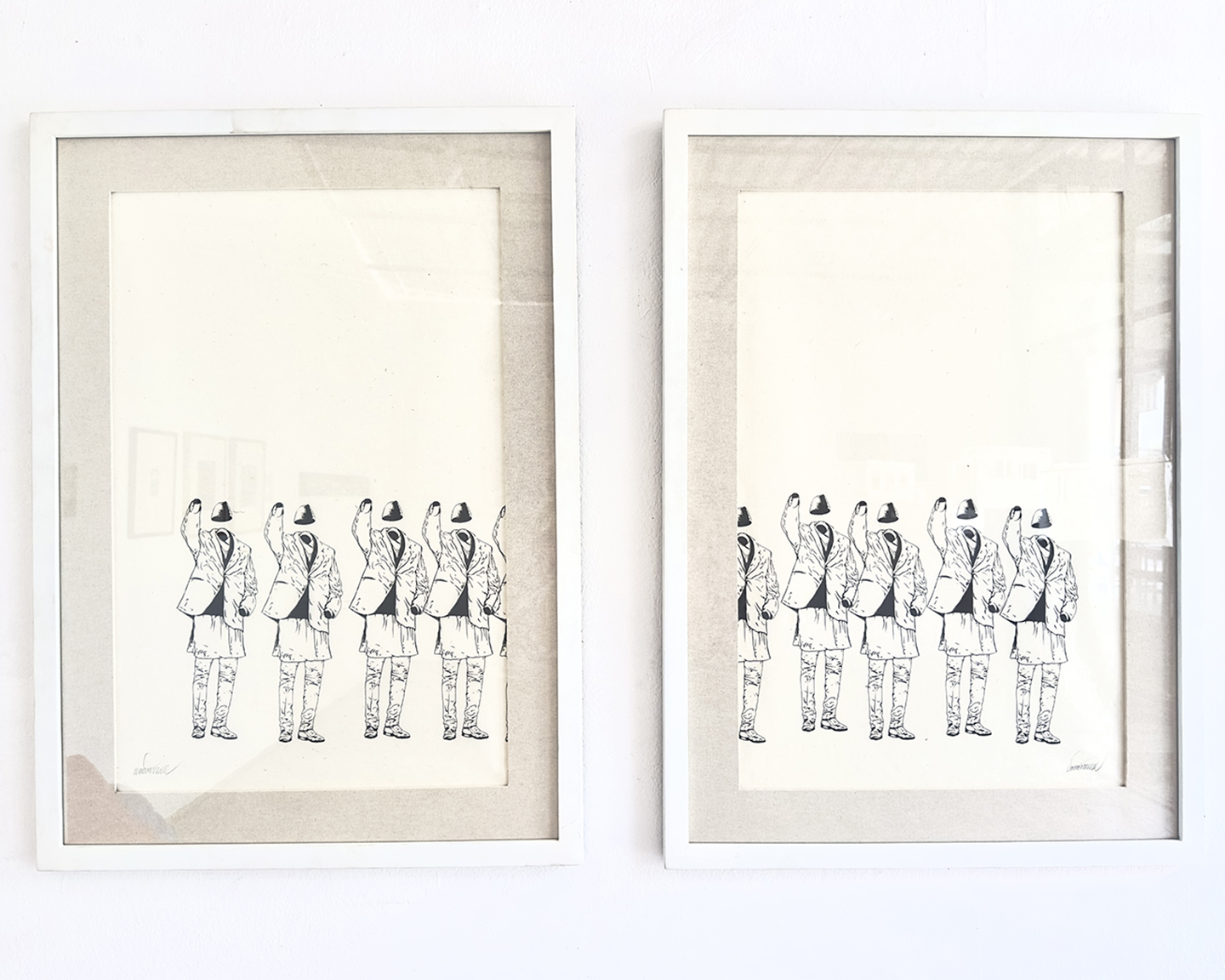
Occurrence, from Phantasmal Series (Diptych)
Medium: Screen Print of Nepali Paper
KAILASH K. SHRESTHA is a Nepal-based contemporary artist, curator, and cultural practitioner whose interdisciplinary practice examines memory, identity, power, and the conditions of contemporary life. Working across painting, mixed media, installation, public art, and socially engaged practice, he explores the relationship between personal experience and broader political and cultural realities.His work moves between the intimate and the collective, engaging questions of isolation, belonging, fractured identities, and social tension. His ongoing exploration Phantasmal reflects his sustained inquiry into the psychological and social dimensions of contemporary existence, approaching art as a space for critical reflection, dialogue, and questioning.In 2010, he founded Artudio – Contemporary Art Center in Kathmandu, extending his artistic vision into sustained engagement with curatorial practice, public art, education, artist residencies, and cultural institution-building, while creating platforms for dialogue, collaboration, and contemporary artistic exchange.
KAPIL MANI DIXIT is a contemporary figurative artist from Nepal who has dedicated more than two decades to exploring the human figure through art. At a time when nude and figurative art was rarely accepted in Nepal, he chose to follow his passion and gradually helped create a more open space for this form of expression. After earning his Bachelor of Fine Arts from the University of Texas at Arlington in 2004, Kapil returned to Nepal in 2008, leaving behind a successful career in the USA. Since then, he has continued to challenge social perceptions through his work. He is the founder of #Apt08 Art Studio, dedicated to promoting figurative art through classes and workshops. His work has received over 40 national and international awards and has been featured widely in the media.
Artist Statement
The Open Cage explores the feeling of being trapped even when a path to freedom remains clearly open. The large red sofa represents power, authority, and society’s influence over our lives, decisions, and identities. Surrounding the sofa, the open cages symbolize emotions, thoughts, desires, and parts of ourselves that we keep locked within. Although their doors are open, we remain inside, restrained by fear of judgment, social expectations, cultural norms, and the pressure to conform. The figure represents an individual caught between the desire to express an authentic self and the hesitation to break away from invisible limitations. Rough lines, layered forms, and strong contrasts reflect confusion, tension, vulnerability, and emotional struggle beneath the surface. Through this work, I question whether we are truly free when we fear expressing what we think, feel, and desire. The painting invites viewers to consider the difference between physical and emotional freedom. Sometimes, the cage is not around us—it exists within us.
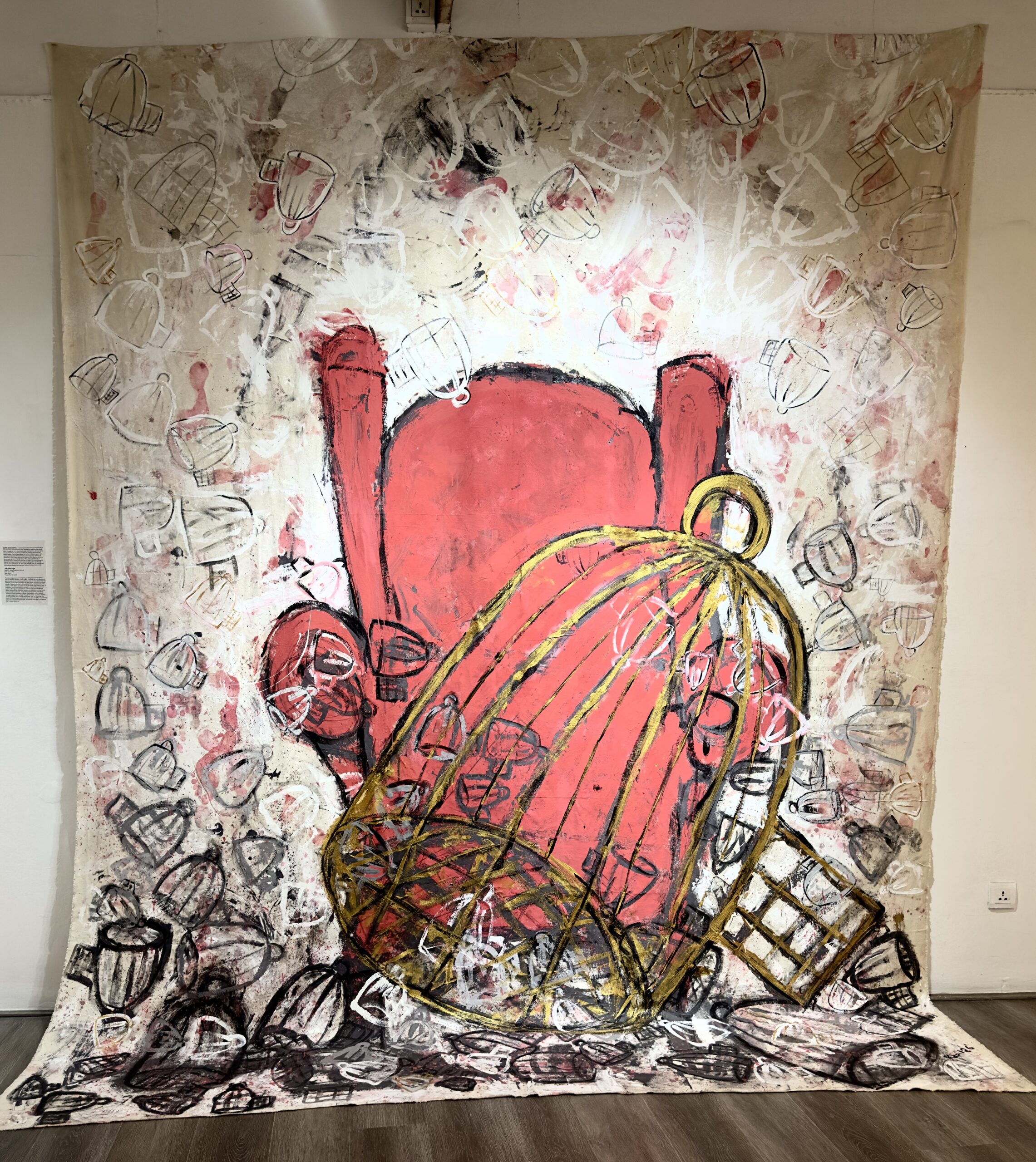
The Open Cage
Medium: Mixed Media on Canvas
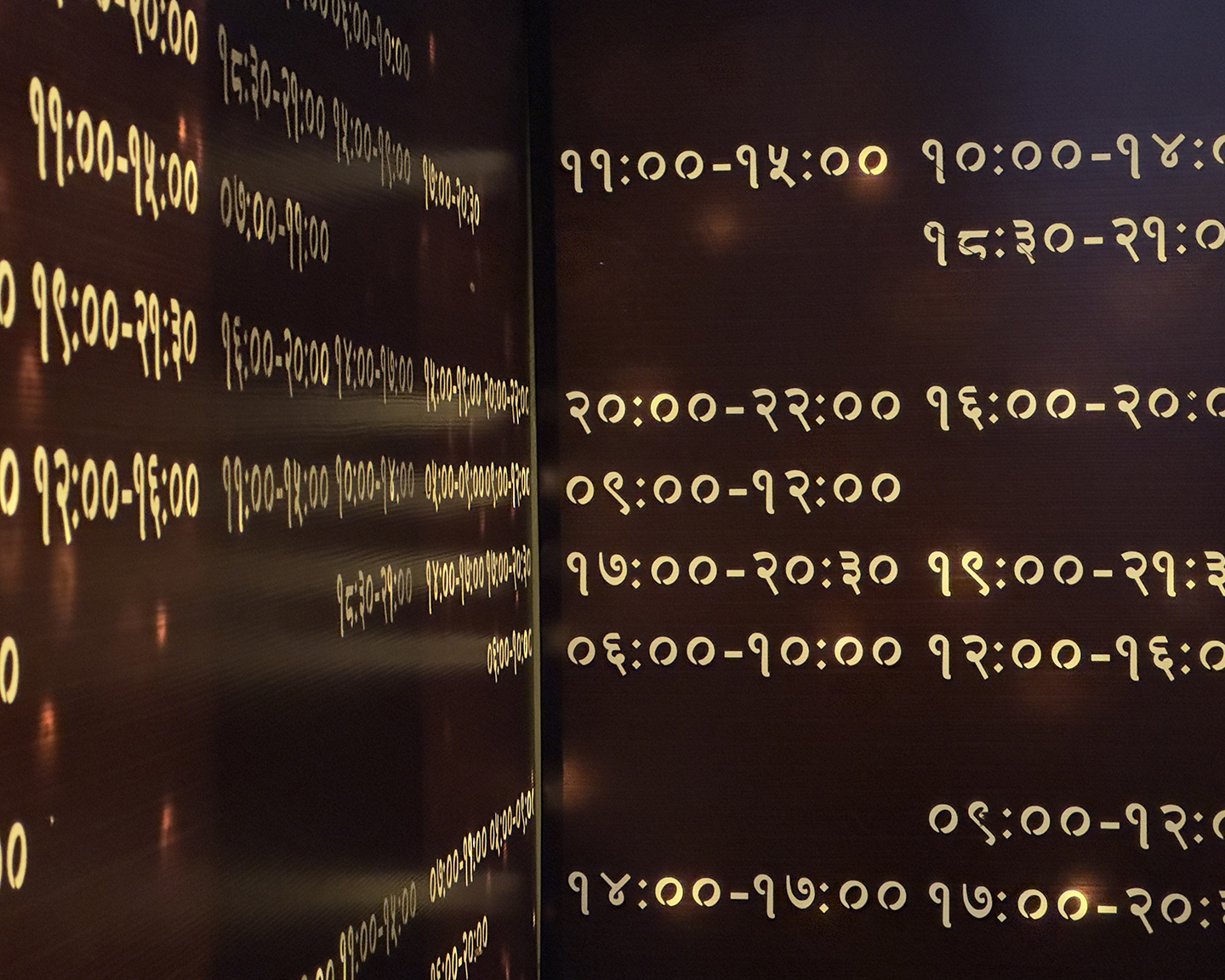
The Maze
KAUSHAL JOSHI is a multidisciplinary visual artist based in Kathmandu, whose compelling work explores the complex interplay of contemporary socio-political and environmental themes. He believes art is a catalyst for profound dialogue, capable of stirring thought on the colective issues that shape our lives. Art emerges from self-analysis, posing questions, reacting to the world, offering realizations, and making reflective statements thatinvite open discourse. Mr. Joshi graduated MFA from Central Academy of Fine Arts, Beijing. His artistic vision has been recognized through invitations to numerous national and international art residencies and biennials. He presently holds the positions of Associate Professor and Former Head of Department at Kathmandu University, Department of Art & Design.
Artist Statement
The Maze is an immersive art installation that captures the sensory and emotional exhaustion of Nepal’s load-shedding era (2006–2016). For over a decade, citizens were forced to live and work around an unpredictable power grid. While the public was told the energy shortage was inevitable, it was actually an artificial crisis manufactured by political corruption andcorporate greed. This artwork invites us to reflect on how a nation wasdeceived and manipulated by those in power.
MANISH LAL SHRESTHA is a multidisciplinary visual artist and curator based in Kathmandu, Nepal. With over two decades of practice, he is recognized as a significant figure in Nepal’s early postmodern art movement. His practice encompasses painting, installation, performance, textile, sound, mixed media, and conceptual art, exploring materiality, ritual, identity, memory, transformation, and contemporary urban experience.Shrestha graduated from Sir J. J. School of Fine Art, Mumbai, in 2001 and has presented more than 20 solo exhibitions, alongside numerous international exhibitions, biennales, residencies, workshops, and cultural exchanges across Asia, Europe, Australia, and the United States. His notable engagements include Kathmandu Triennale, Busan Biennale Sea Art Festival, Today Art Museum Beijing, Reimagine: Himalayan Art Now at the Rubin Museum of Art, New York, and Wrightwood 659, Chicago.He received Nepal’s National Fine Arts Award (2011) and Australian Himalayan Art Award (2018). He is also Founder Director and Curator of Gallery Mcube.
Artist Statement
In Search of the Diamond reflects on the desire for a better life and the political realities that shape our choices. Within Made in Mind Series III: Narratives of the Contemporary, the work explores how hopes and ideas can move from the mind into reality. The diamond represents aspiration—prosperity, dignity, opportunity, and the hope for a better future. The antique window connects past and present, suggesting that each generation can look beyond inherited systems and imagine something new. The King, Queen, and Jack, surrounded by the lowest cards, turn the familiar hierarchy of the game upside down. The numbered cards represent ordinary people whose collective strength can question authority and reshape the balance of power.The heart and tangled, vein-like ropes bring this struggle into the human body, expressing connection, pressure, confusion, and the search for freedom.
Together, the elements trace a movement from inheritance and desire toward awareness, resistance, and collective change—a search for a diamond that belongs to everyone.
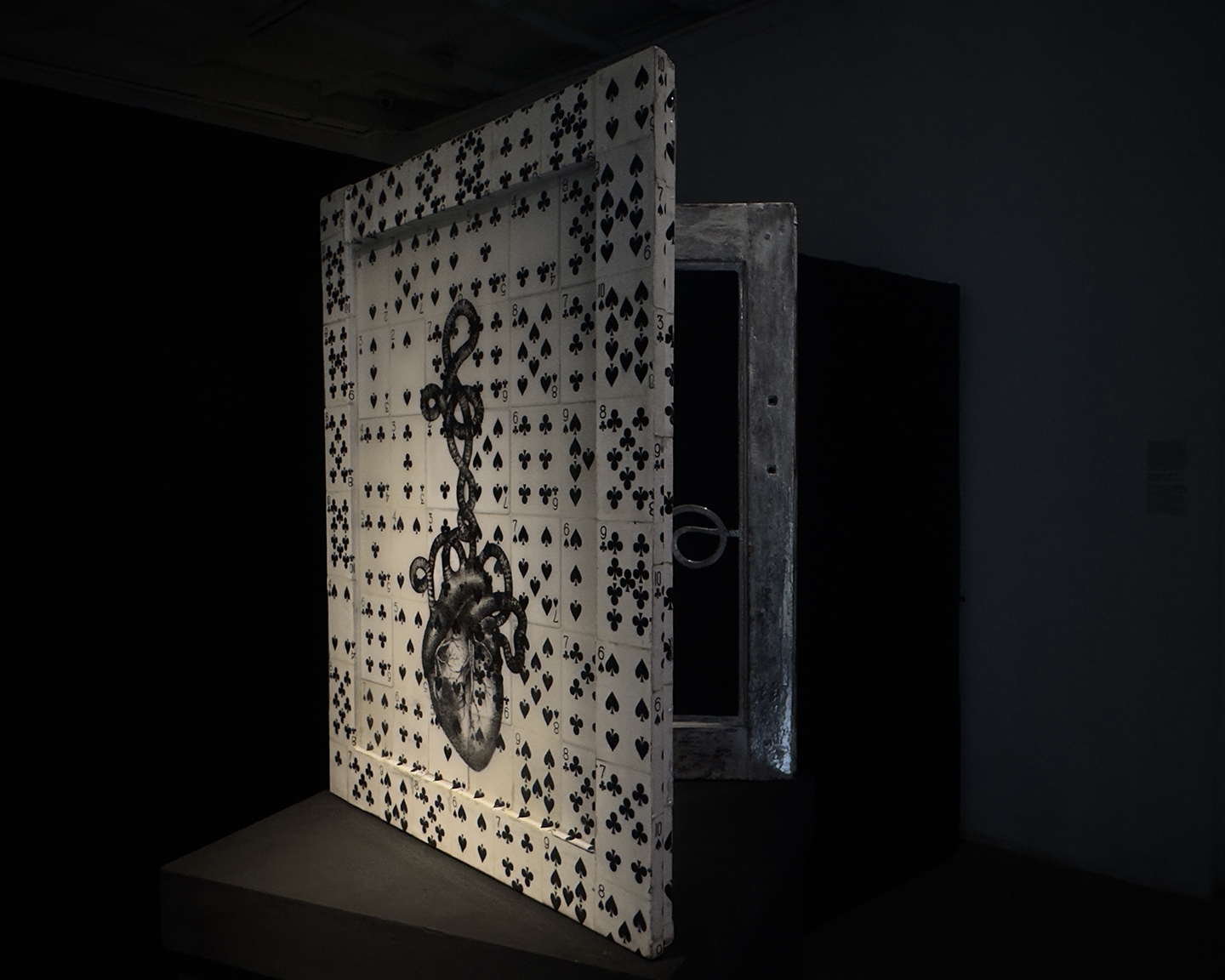
In Search of the Diamond
Medium: Wood, Card, Metal (Mix Media)
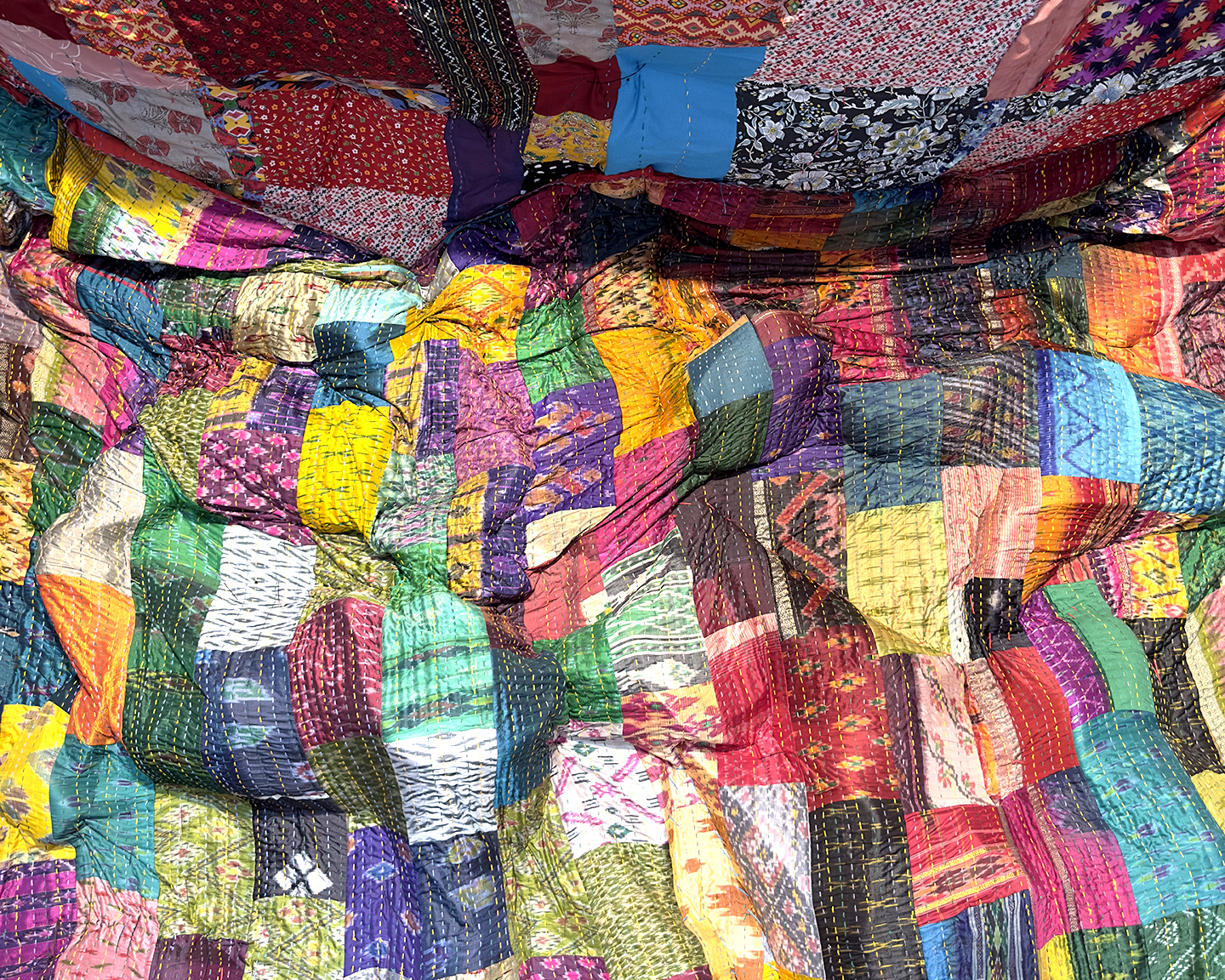
Somethingness
Medium: Installation with clothes.
NIRVITA SHAKYA is a visual artist based in Nepal, working primarily in conceptual art. She completed her BFA in Studio Art from Kathmandu University School of Arts and design. Having also exhibited her work internationally in Mauritius and Bangladesh, her practice is rooted in a close observation of everyday life, its subtle rhythms, quiet tensions, and evolving narratives.She views life as an ongoing, unfinished process, and her work reflects this continuousexploration of existence, perception and experience. She works across a range of mediums, and finds herself gravitating towards textile art, installation and performance arts. Drawn to asking questions that leave room for ambiguity, an indispensable part of her work is allowing viewers to form their own connections and relationships with it. Breathing space both literal and metaphorical remains central to her approach.
Artist Statement
Imagine being inside a cave with no opening for eternity. Then, one day miraculously, a hole appears without warning and offers you a chance to discover the space outside the cave. With an invisible rope tied to you that might pull you back to the cave of nothingness at any moment, what do you make of the time you get to spend in this space of somethingness? With no map, pattern, or blueprint to follow, and a space whose ears are indifferent to your cries of absurdity, injustice, joy, sorrow, happiness, or despair, what are your dance steps at this disco of existence?Somethingness" welcomes you into a space where the empty darkness from the barren cave of inexistence meets the absurd, breathing colors and light outside it, and you stand as the distance between them.
ROSHAN BHANDARI is a Kathmandu-based visual artist, curator, and art educator whose practice explores myths, Nepali folklore, cultural memory, and everyday rural life. He earned his BFA in Painting from Bharati Vidyapeeth’s College of Arts, Pune University, India, through the ICCR Scholarship, and completed his MFA in Painting at Tribhuvan University.His artistic journey has evolved from exploring silence, contemplation, and inner emotional landscapes toward preserving and reinterpreting Nepali oral traditions, folk narratives, and cultural memory through a contemporary visual language.Bhandari has exhibited in Nepal, India, Japan, Bangladesh, the Philippines, and Italy. His recognitions include the First Prize in Contemporary Painting from the Nepal Academy of Fine Arts, Hem-Ganga Pratibha Yuva Puraskaar from the Cartoonists’ Club of Nepal, and Third Prize in Cartooning from The Indian Express, Pune.From 2013 to 2024, he served as lecturer and vice principal at Sirjana College of Fine Arts and continues working as an artist, curator, and consultant.
Artist Statement
Medium: Acrylic on Canvas Mind and Gold explore the inner process of transformation through the ancient metaphor of the goldsmith’s fire. Like raw gold, the mind carries layers of ego, anger, attachment, fear, and illusion, impurities that often obscure its inherent clarity. Here, meditation becomes a quiet fire: not one that destroys, but one that refines. Through stillness and self-awareness, the mind gradually sheds what weighs upon it, revealing a deeper sense of presence and peace.Gold appears within the paintings as a subtle metaphor for this inner radiance, the possibility that what we seek through transformation may already exist within us, waiting to be uncovered.The series reflects on a simple question: What remains when the noise of the mind begins to settle? Perhaps, beneath all that we carry, there is only stillness, and a quiet gold of being.
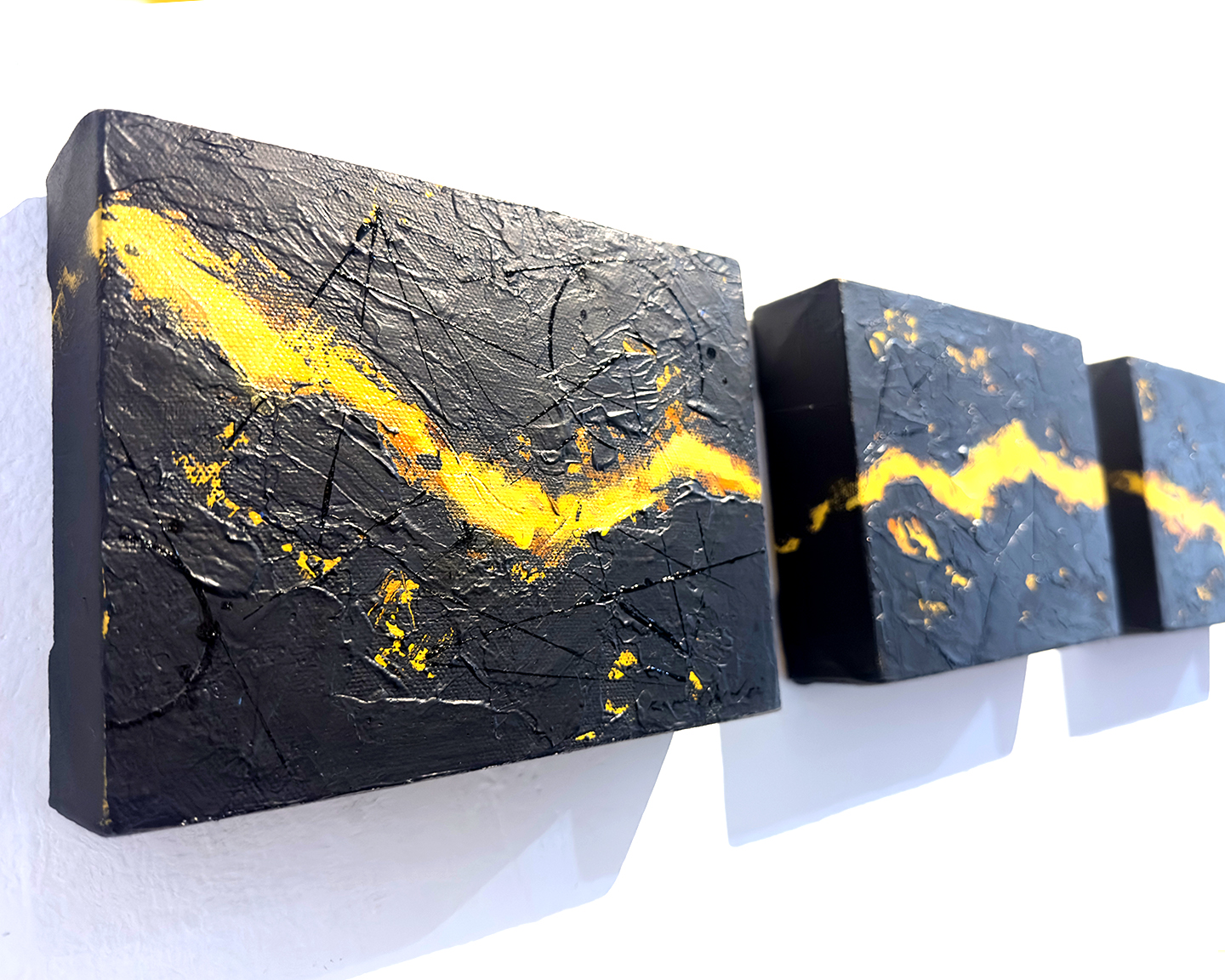
Mind and Gold
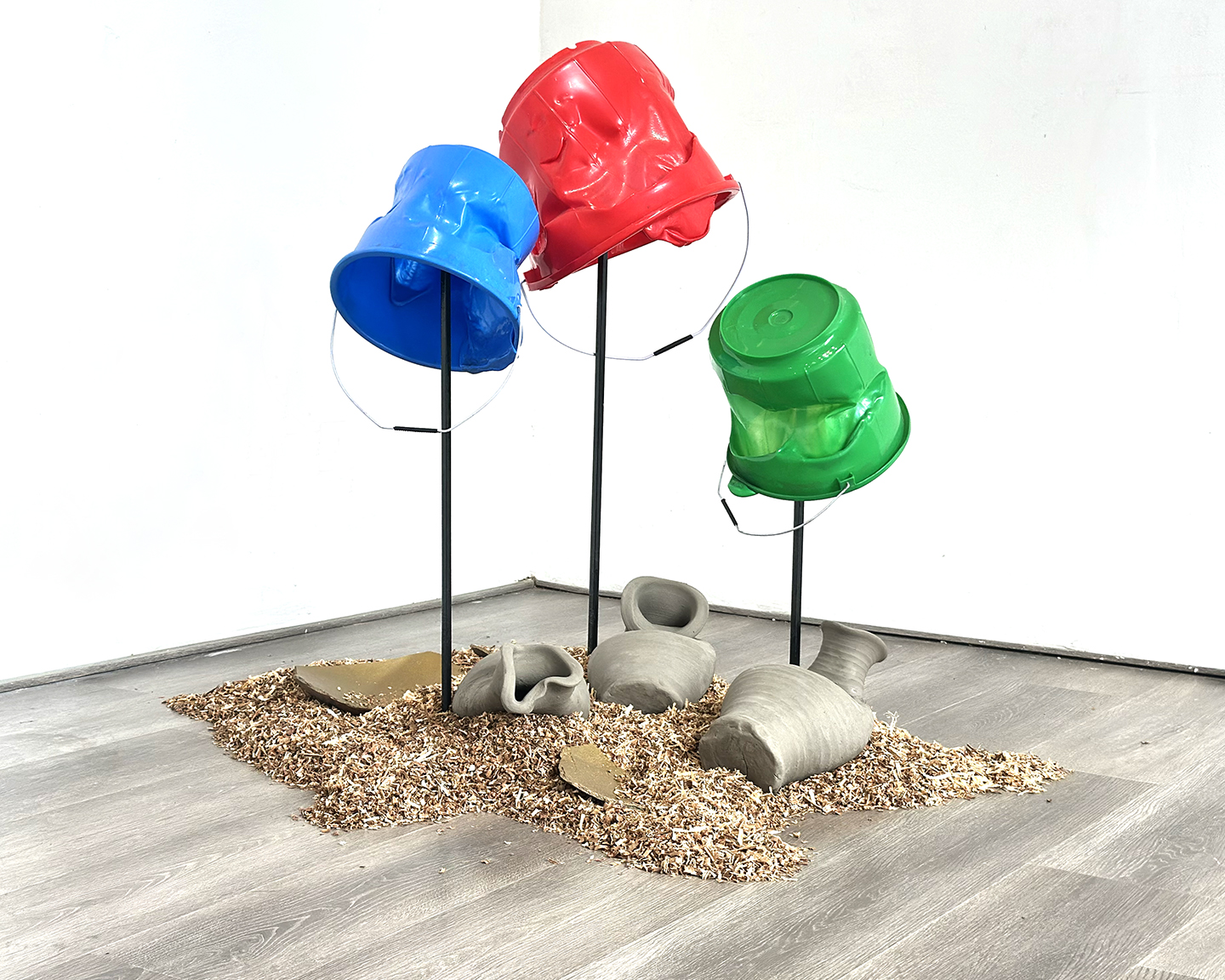
Deforming Thoughts Part of #365rotation (३६५फन्को)
Medium: Plastic, metal, clay and wood
ROSHAN MISHRA is an artist, curator, and museum professional based in Kathmandu, Nepal. His interdisciplinary practice moves across painting, sculpture, and installation, exploring abstraction, materiality, space, energy, and infinity. His work reflects on the interconnectedness of human existence with nature, objects, memory, and the larger universe.Mishra’s paintings frequently employ geometric forms and abstraction to engage with ideas beyond conventional representation. His sculptural and installation works incorporate readymade, discarded, forgotten, and organic materials, which he transforms and recontextualizes to reveal their personal, cultural, and historical associations.Memory, culture, spirituality, and materiality remain central to his practice, alongside an interest in how objects carry traces of time, place, and experience. His artistic perspective is also informed by his curatorial and museum work, particularly his engagement with heritage and cultural memory. Rather than offering fixed interpretations, Mishra creates spaces for contemplation, allowing meanings to emerge, shift, and be reinterpreted by audiences. He currently directs Taragaon Next in Kathmandu.
Artist Statement
An idea appears, takes shape in the mind, changes, and sometimes disappears before it has the chance to become something complete. I often enjoy forming ideas in my head. Some stay with me and become part of my aspirations, while others disappear almost instantly, like a bubble. I enjoy it when they remain abstract and become nothing, simply remaining as a process within me, without needing to become something.But perhaps our thoughts are never entirely our own. They are influenced by what we have seen, heard, and experienced. Some come from the culture we grow up in, while others come from the people and world around us. We carry these influences without always knowing it. Once they enter our minds, they begin to change.The forms in the work come from this process. They look familiar at first, but they do not remain fixed. They seem to be caught somewhere between becoming and disappearing. I see them as thoughts taking shape, changing direction, colliding with another thought, or simply fading away.How much of what we believe and imagine is truly our own. What we absorb from the world around us never remains exactly the same. We reshape it through our own experiences, memories, and understanding, and by doing so, we become part of its next form.Through these deformities, I give shape to something that normally cannot be seen. I allow my thoughts to be in motion; unfinished, raw, uncertain, and constantly changing.
ROSHAN PRADHAN is a Nepalese contemporary artist, educator, and cultural practitioner based in Kathmandu. He holds a Master’s Degree in Fine Arts from Tribhuvan University and is the Director of Pagoda Institute of Fine Arts and a founding member of Pagoda Group – Nepalese Contemporary Artists’ Guild. He also represents DFEWA worldwide in Nepal and serves as Nepal Country Representative for Fabriano in Acquarello, Italy. Pradhan has received several notable awards, including the Lalitkala Special Award (2023), Creative Artist of the Year Award (2020), and Araniko Youth Award (Gold Medal, 2015). His artistic practice has been presented through solo exhibitions in Nepal, Japan, and Romania, alongside numerous international exhibitions, biennales, art camps, and cultural exchange programmes across Asia, Europe, and beyond. His recent exhibitions include presentations in Romania, Singapore, Thailand, the United States, and Nepal.
Artist Statement
It explores the tension between spiritual transcendence and the weight of human existence. A serene sacred presence rises above a fragmented world, while the crouching human figure carries the visible and invisible burdens of life. The guardian lions suggest strength and protection, while the flowing forms connect the earthly body with a higher consciousness.The contrasting fields of blue, yellow, white, and red represent different emotional and psychological state stillness, awakening, purity, and vitality. Through the dialogue between sacred symbolism and contemporary geometry, the painting reflects the continuous human journey between suffering, transformation, and inner liberation.
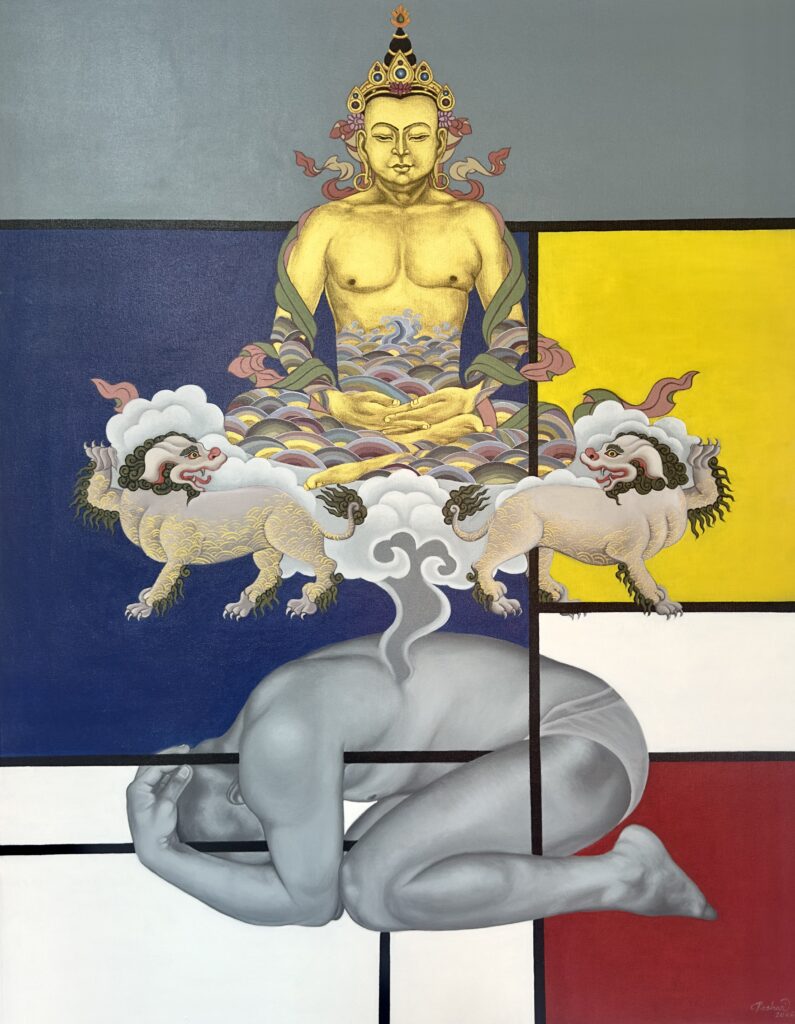
Sacred Contradiction
Size: 36" X 46"Medium: Acrylic on Canvas
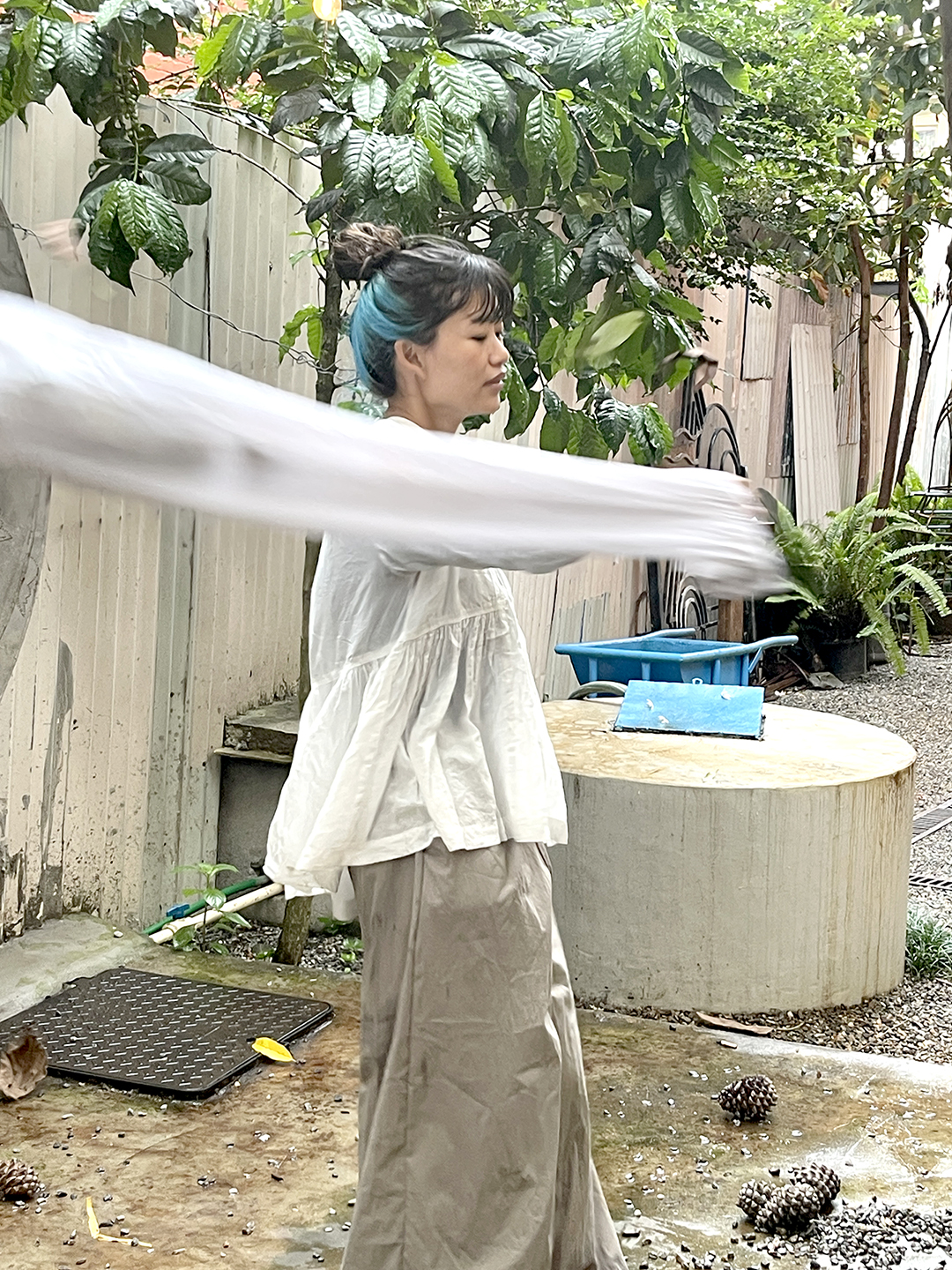
From Khola to River
Performance
SAMANA NACHHIRING RAI is a multidisciplinary artist, researcher, and writer based in Kathmandu, Nepal, with roots in Ilam. She holds a BFA from Lalitkala Campus and master’s degrees in Anthropology and Fine Arts, specializing in Printmaking, from Tribhuvan University.Her practice moves across printmaking, performance, writing, and research, exploring lines, threads, memories, identity, and everyday life. Working with diverse materials and forms, she embraces an interdisciplinary approach rather than limiting herself to a single medium.As an Indigenous-born woman, Rai explores her relationship with home, memory, culture, and identity. Her work often emerges from personal experiences, observations, memories, and questions. Her academic background in Fine Arts and Anthropology enables her to connect research, lived experience, and artistic expression.Rai describes the intersection of art and anthropology as “Arthropology.” For her, art becomes a way to remember, question, investigate, and understand herself and the world around her, creating space for reflection and dialogue.
From Khola to River
From Khola to River grows from a childhood shaped by stories of water and land. I remember the Sunkoshi through my ancestors and my mamaghar in Udaypur, the Bagmati through my first encounters in Kathmandu, and the Trishuli through frightening stories of accidents while traveling. Rivers have always been part of our lives.I once thought I understood the khola, but perhaps the river understands us better. Today, as floods, displacement, and loss affect many families, my koku’s words return to me: “Don’t throw garbage into the river; one day it will come back to you.” What felt like simple advice now feels like an urgent warning.Inspired by indigenous knowledge, science, plants, soil, and water, this performance reflects on interconnection and responsibility. Through my body, stones, dry earth, and movement, I pause, listen, and remember. The river may be negotiated with, but it ultimately claims its course. We are not separate from water; we are bound to it.
SARITA DONGOL is a Nepali visual artist, educator, and curator with a Master’s degree in Fine Arts from TribhuvanUniversity, Nepal. Her artistic practice explores nature, environmental destruction, and the relationship between humans and society. Since 1992, she has presented 15 solo exhibitions and participated in numerous national and international exhibitions, residencies, and art camps across Asia, Europe, and Australia. She has received several prestigious honors, including the National Talent Award from the Ministry of Culture, Tourism and Civil Aviation, Nepal, and recognition from NAFA for her contribution to the art field over 35 years. Her international engagements include residencies andexhibitions in Japan, South Korea, Bangladesh, Malaysia, Thailand, China, Mongolia, France, Australia, and other countries.Sarita is a lecturer at Himalayan College of Engineering and the founder of Classic Gallery, CCAS Art School, and Mikha CB, a creative platform supporting inclusive art education and empowerment. She is also a member of NAFA.
Artist Statement
Made in Mind is an installation that connects contemporary art, human emotions, everyday life, and environmental awareness. The chilli, an important symbol in my artistic practice,becomes the central element of this work. I will create many handmade paper-mâché chillies and arrange them on natural jute bora bags. Through this simple yet meaningful material, I explore how our daily choices—especially the use of plastic bags—affect nature.The work invites viewers to connect their own feelings and habits with environmental responsibility. It asks a simple question: “What can I change through my own choices?”
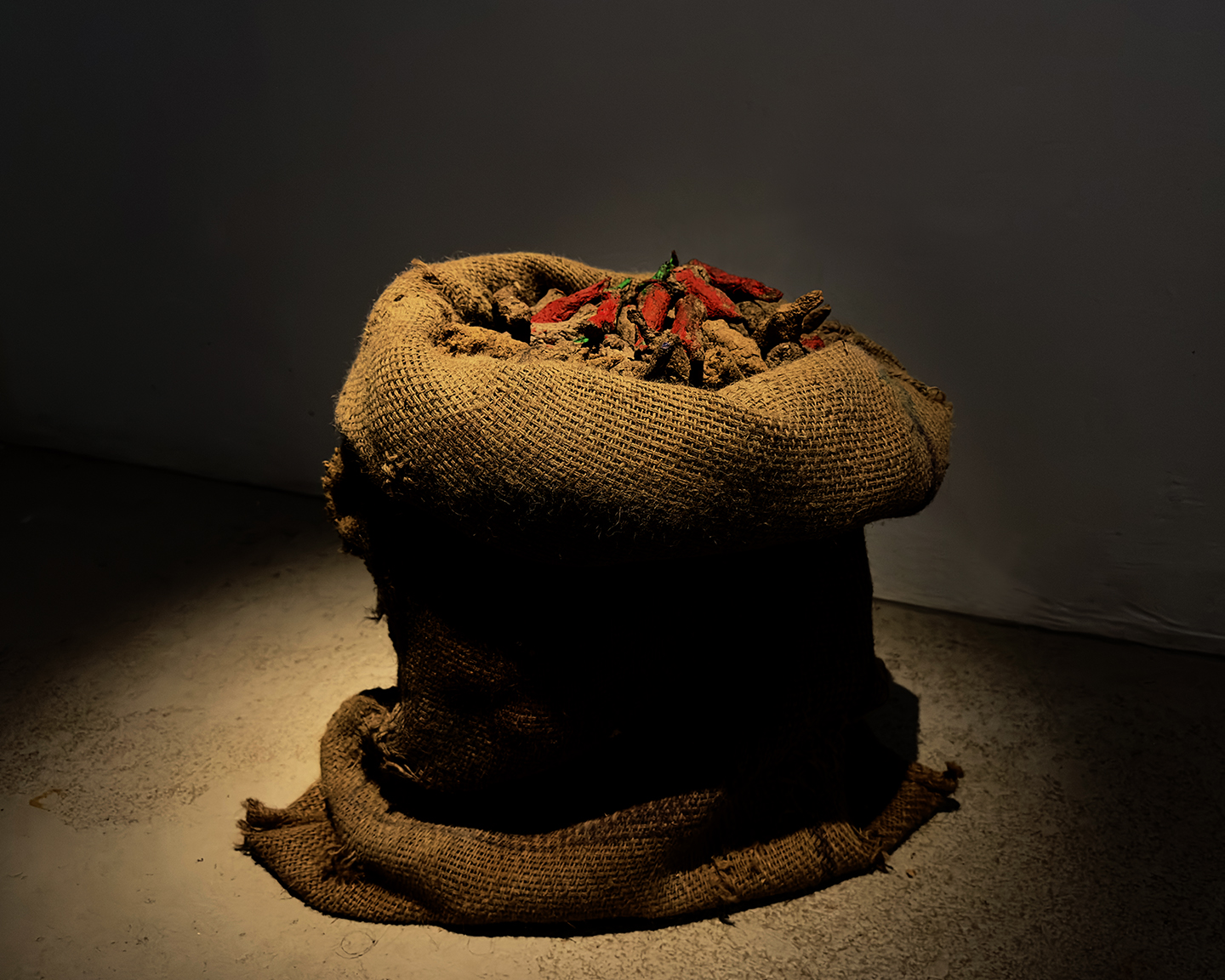
Made in Mind
Medium: Paper-mâché and natural jute bora
Size: Variable
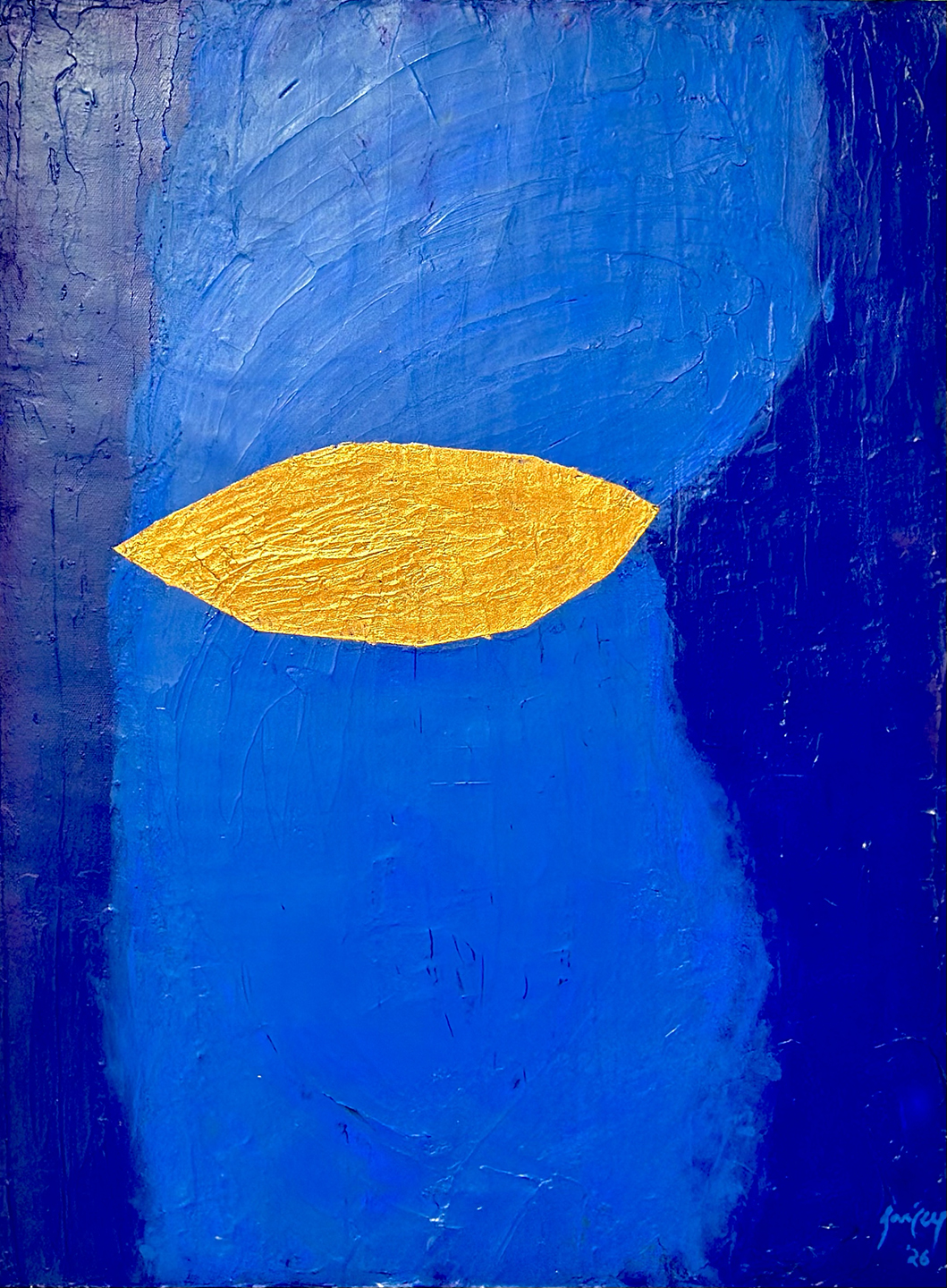
Tatva: Forms of Water and Air
Medium: Mix Media
SANJEEP MAHARJAN is a Nepalese sculptor and visual artist whose practice bridges the ancient and contemporary, drawing deeply from the artistic heritage of the Kathmandu Valley. His figurative sculptures connect with the aesthetics and traditions of the Malla and Licchavi eras, exploring regional motifs, iconography, and symbolic languages that represent the physical world, natural elements, and divine entities. Through extensive research, Maharjan studies the evolution and movement of these visual traditions across Asia over centuries. Alongside his figurative practice, he explores the potential of pure geometry and simplicity through abstract sculptures and ceramics, reflecting his perception of movement, transformation, and renewal in nature. His interdisciplinary practice also includes painting, printmaking, three-dimensional collage, and installation. Maharjan is an Assistant Professor of Sculpture at Kathmandu University, School of Arts, Department of Art and Design. He also teaches art history and conducts teachers’ training and art workshops across Nepal, contributing to art education and community development.
Artitst Statement
Tatva is a series of sculptures and ceramics inspired by the movement, renewal, and cyclical nature of water and air. The forms celebrate their grace, fluidity, freedom, and continuity, while expressing a mind that finds harmony, healing, and wonder through its interaction with these elements. Moving between figurative forms and simplified geometries, the sculptures become a visual language through which the artist explores the endless movement of water and air. The series is also deeply connected to Nepal’s artistic heritage. Inspired by ancient and medieval Nepali artists and carvers, the work draws from motifs representing the water cycle, particularly clouds carved in Torana and Kirtimukha. These forms evoke water descending from the celestial realm, nourishing the earth, flowing through rivers, and returning as groundwater. Through contemporary sculpture and ceramics, Tatva reimagines this enduring symbolic language, connecting natural elements, cultural memory, and spiritual imagination.
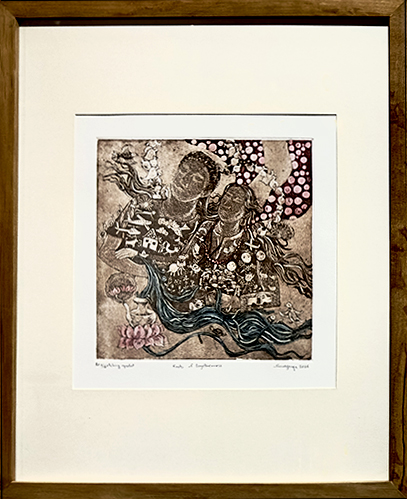
Roots of Togetherness
Etching Prints
SAURGANGA DARSHANDHARI is a Kathmandu-based multidisciplinary artist and printmaker whose practice encompasses printmaking, installation, performance, and mixed media. She holds a Bachelor’s degree in Fine Arts from Tribhuvan University and a Master’s degree in Printmaking from the University of Development Alternative, Bangladesh. Currently pursuing an MPhil/PhD in Fine Arts at Tribhuvan University, she has presented four solo exhibitions and participated extensively in national and international exhibitions, biennales, triennials, and performance festivals across Asia, Europe, and beyond. Her residencies include Sri Lanka, Bangladesh, South Korea, India, China, and Germany. A recipient of numerous national and international awards, she is the founder of Bindu Space for Artists and Vice-President of Printmaking Nepal. Her practice also emphasizes art education, community engagement, healing, and socially responsive artistic initiatives.
Artist Statement
This series of etchings is about our connection with nature, people, culture, and life. I use images of water, flowers, birds, roots, and human figures to show how everything around us is connected.The flowing lines and many small details represent the movement and complexity of life. The figures surrounded by nature express a feeling of belonging and being together. Roots symbolize the invisible connections between people, nature, and our memories.Through these works, I want to show that even as our lives change, our roots, relationships, and connection with nature remain important.
SUSHMA SHAKYA is a Nepalese conceptual artist whose practice explores profound themes of nature, cultural preservation, and the impact of modernization. Since completing her Master’s degree in Printmaking from Tribhuvan University, she has actively exhibited her work nationally and internationally, raising awareness about individual responsibility toward protecting nature and cultural heritage. Her artistic journey has reached audiences in Indonesia, Thailand, China, Japan, Canada, the United States, Australia, Sweden, India, and Bangladesh. Her fourth solo exhibition, Chen – Overlooked Reality, marks an important point in her career, reflecting on natural balance and the growing imbalance caused by modernization and human intervention. Working across painting, printmaking, video, installation, and sculpture, Shakya allows the concept to determine her choice of medium. Her accomplishments include the Himalayan Artist Award and recognition from the Nepal Academy of Fine Arts. With over a decade of teaching experience, she currently teaches at Aksheswar Traditional Buddhist Art College and Sirjana College of Fine Arts.
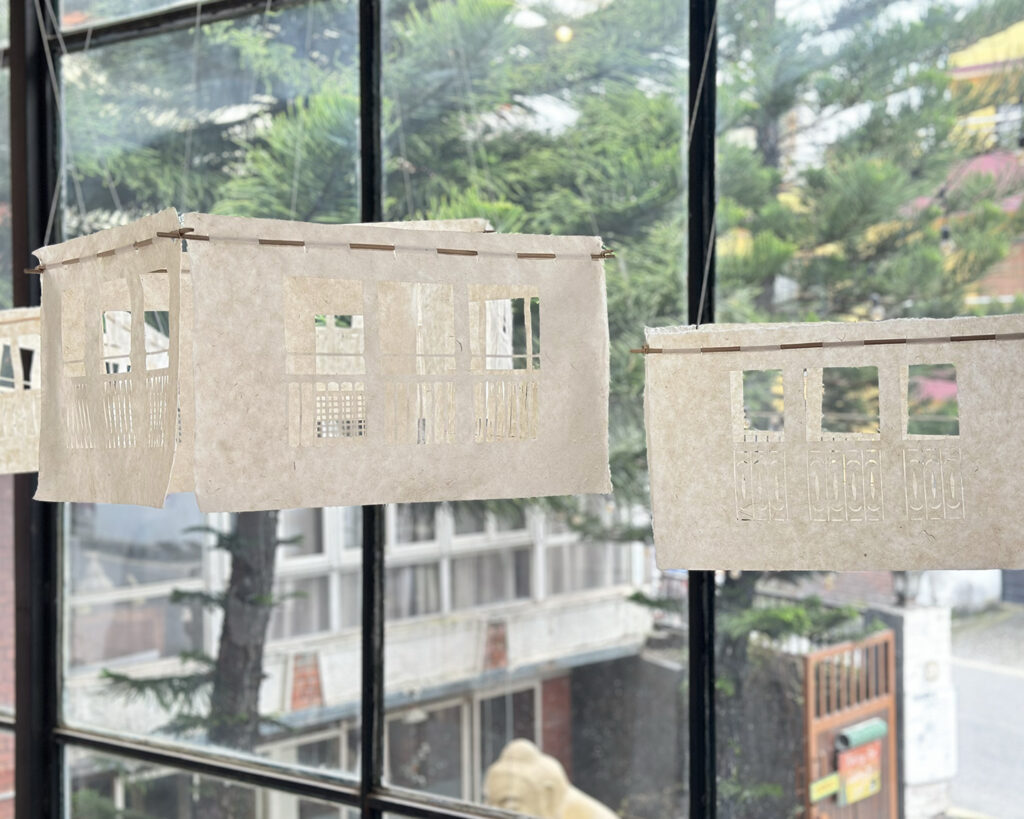
Home Sweet Home(No personal statement)
this work is dedicated to the flood victims in Nepal, 2026.
Supporters